
Inner and Outer Brass Islands, St. Thomas US Virgin Islands: A Wild Northside Landmark
Just about a mile off the Northside of Saint Thomas, two small islands rise from the Atlantic, Inner Brass and Outer Brass. If you’ve driven anywhere on the Northside or spent time at Hull Bay, Dorothea, or Neltjeberg, you’ve seen them resting on the horizon, familiar silhouettes against endless blue. They feel close enough to touch, yet most people who visit St. Thomas never set foot on their rocky shores.
There are no docks, no beach bars, no development. No easy landings. Just steep cliffs, seabirds riding thermals, a rumored small herd of wild goats on Inner Brass, and the constant rhythm of waves breaking against stone. In a territory where coastal development has reshaped so much of the shoreline, the Brass Islands remain largely untouched. They are living reminders of what the Virgin Islands looked like centuries ago, rugged, raw, and ecologically alive.
For travelers searching for hidden gems in St. Thomas, the truth is this: Inner and Outer Brass aren’t destinations in the traditional sense. They’re better understood as protected wild spaces, scenic, significant, and quietly essential.
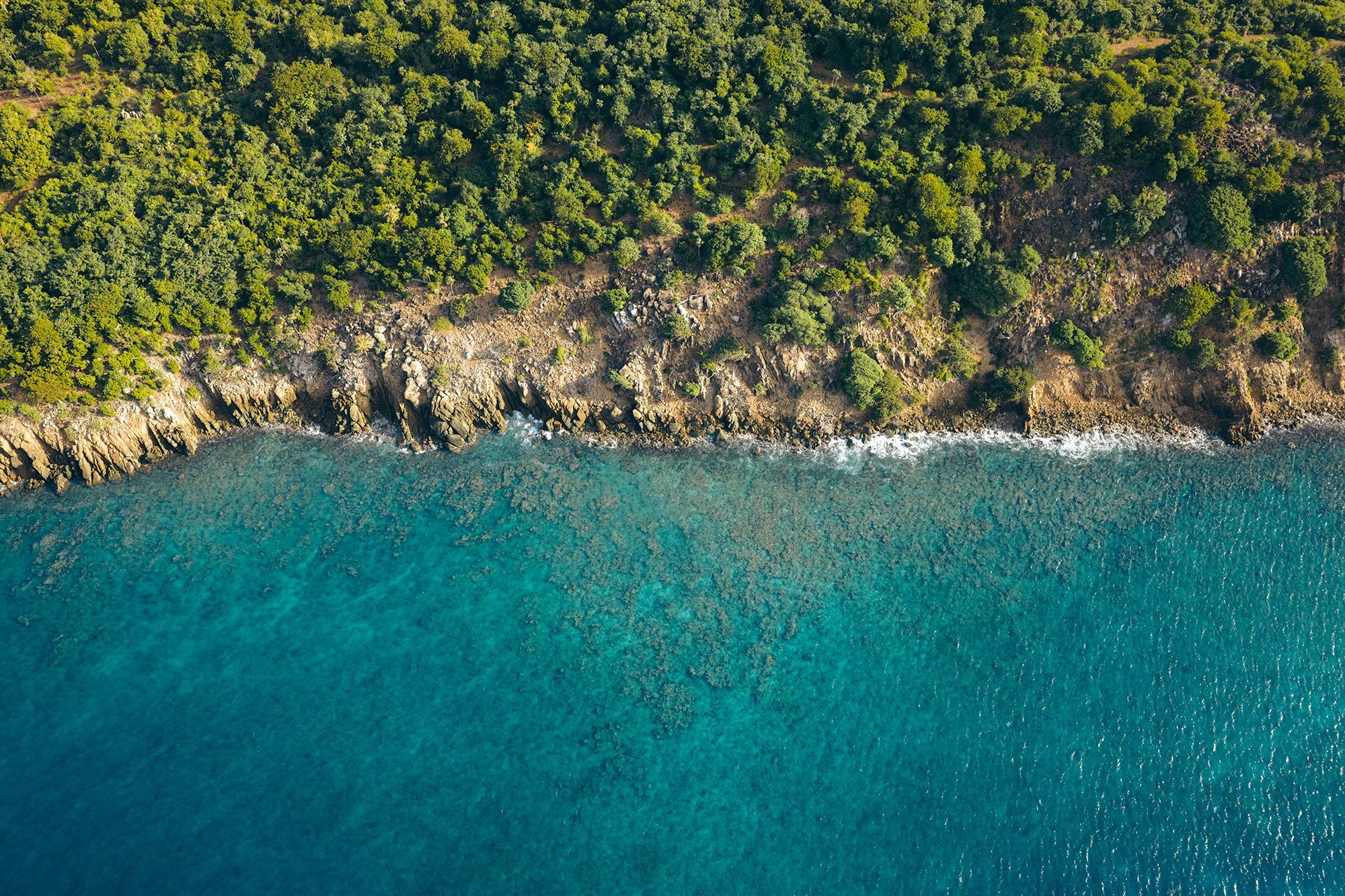
Where Are Inner & Outer Brass?
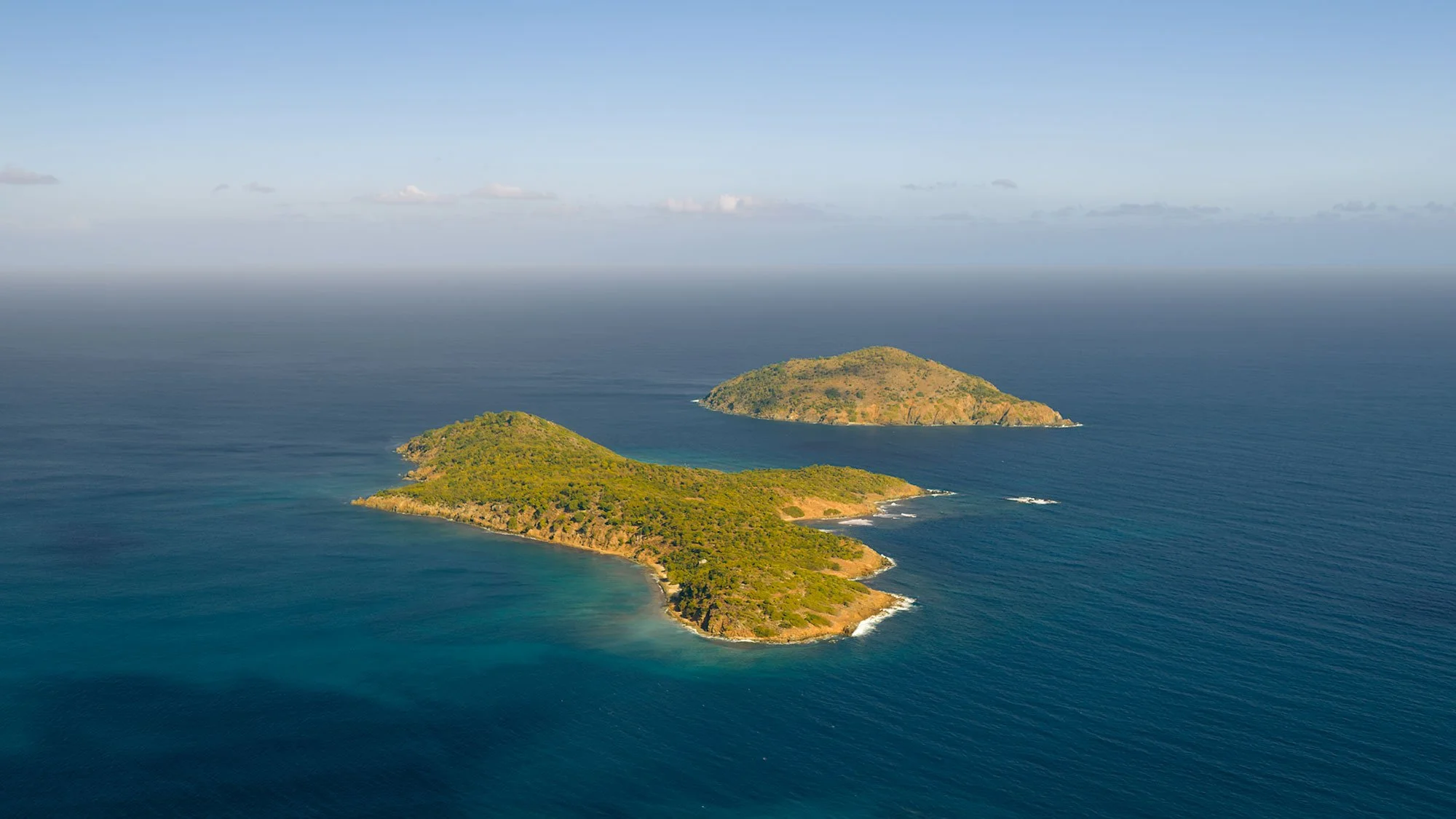
Inner Brass sits roughly one mile offshore from St. Thomas’ Northside. Outer Brass lies about another mile beyond that, facing the open Atlantic swells. From elevated viewpoints along the Northside, you can clearly see the pair aligned against the horizon.
Inner Brass is privately owned. Outer Brass belongs to the Government of the U.S. Virgin Islands and is designated as a wildlife sanctuary. Together, they form one of the most important seabird nesting habitats in the region.
Because of their exposure to the Atlantic and lack of infrastructure, access is limited and landings can be difficult. Most people experience the islands from a boat offshore or simply from the beaches of St. Thomas itself.
A Seabird Sanctuary in the U.S. Virgin Islands
The Brass Islands are best known not for beaches, but for birds. Brown pelicans, brown boobies, red-billed tropicbirds, gulls, and magnificent frigatebirds all nest here. During breeding season, the cliffs and ledges come alive with movement and sound.
Brown Pelicans: A Conservation Comeback
The Brown pelican is one of the most recognizable birds in the Virgin Islands. You’ll see them gliding low over the water along nearly every stretch of St. Thomas’ coastline. When they spot fish, they fold their wings and plunge headfirst into the sea, the only pelican species that hunts this way. The force of impact stuns their prey before they scoop it up in their expandable bill.
By the 1970s, brown pelicans were nearing extinction due to pesticide contamination. Today, their presence around Inner and Outer Brass represents a quiet conservation victory. Their recovery is proof that ecosystems can rebound when given space and protection.
Brown Boobies: Agile Cliff Divers
The Brown booby is a regular presence along the rocky ledges of both islands. Sleek and aerodynamic, they hunt in coordinated pairs or small groups, slicing through the wind before diving like torpedoes into the surf.
They lay chalky white eggs directly on bare rock, taking turns incubating and feeding their chicks. Their name comes from the Spanish word bobo, meaning “fool,” referencing how approachable they once seemed to sailors. But along the Brass cliffs, they’re anything but foolish, they are precision hunters perfectly adapted to open-ocean life.
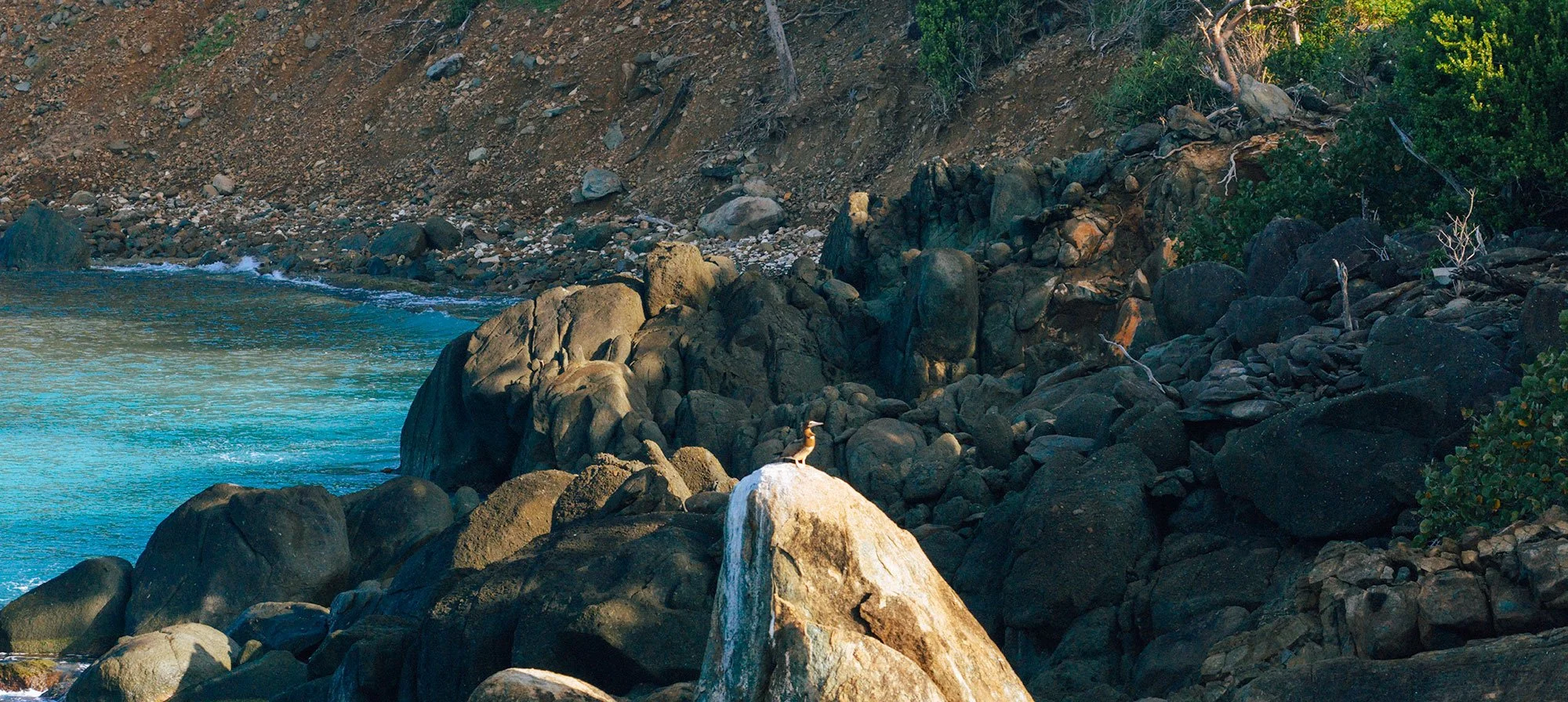
Brown Booby on Inner Brass
Magnificent Frigatebirds: Masters of the Air
Few seabirds command attention like the Magnificent frigatebird. With wingspans reaching up to seven feet, they can remain airborne for days, riding thermals without landing. They are known for stealing food mid-flight from other birds, earning them the nickname “man-o’-war birds.”
During breeding season, males inflate a brilliant red throat pouch to attract females. Frigatebirds only land to breed, which makes their presence above the Brass Islands feel rare and ancient.
Why the Brass Islands Matter
To protect nesting colonies, the Virgin Islands Department of Planning and Natural Resources limits visitation between April and November during peak nesting season. These protections are critical. Ground-nesting seabirds are highly vulnerable to disturbance, especially from boats landing too close to colonies.
In a region where tourism drives the economy and shorelines are increasingly developed, the Brass Islands have become an accidental refuge, protected less by regulation and more by isolation. No infrastructure. No marketing. Just distance and exposure to the Atlantic.
Visiting Inner & Outer Brass
If you’re exploring St. Thomas and hoping to see the Brass Islands, the best way is often from afar, from Northside beaches, scenic overlooks, or responsibly from a boat with a knowledgeable local captain. Conditions can be rough, and landings are not recommended without proper experience and awareness of wildlife protections.
For most visitors, Inner and Outer Brass serve as a reminder that not every island in the Caribbean is meant to be conquered or commercialized. Some places remain wild by design and by default.
And from the shore of St. Thomas, watching frigatebirds circle above those rocky cliffs, that feels exactly right.